Building Your Author Brand: A Beginner's Guide to Going from Idea to Imprint
So you've got a story to tell — but before the world can read it, you need a brand that makes them want to. Here's a behind-the-scenes look at the real steps involved in building an author brand from scratch, from someone who's been in the trenches.
Why Branding Matters Before You Publish
A lot of first-time authors think branding comes after the book. It doesn't!
Your brand is the promise you make to readers before they ever crack the spine. It's your name, your aesthetic, your vibe — and the sooner you build it, the more cohesive your launch will feel. It also helps readers recognize you across platforms and media.
Think of it this way: your book is the product, but your brand is the reason someone picks it up off the shelf, more importantly - keeps coming back to the shelf to see what else you have.
Step 1: Define Your Author Identity
Before you buy a domain or design a logo, you need to answer a few foundational questions:
- What do you write? Genre, tone, themes — get specific. And it's ok if you decide to change it two days later.
- Who are you writing for? Your ideal reader shapes everything from your color palette to your social media voice.
- What's your pen name? If you're writing under a name other than your legal name, decide early. It affects your domain, your ISBN registration, and your publishing imprint.
For example, writing post-apocalyptic folktales that draw from Baltic, Norse, and Mesopotamian mythology calls for a brand that feels ancient, grounded, and a little mythic — not pastel and bubbly.
Step 2: Build Your Visual Identity
Once you know who you are as an author, you can start building what that looks like.
Key elements to nail down:
- Color palette — Choose 3–5 colors that reflect your genre and tone. Dark, rich tones work well for speculative fiction; bright, airy palettes suit contemporary romance. Stick to your palette across everything.
- Typography — Pick 2–3 fonts: one for headings, one for titles, one for body text. Consistency here makes your brand instantly recognizable.
-
Logo — If you're publishing under your own imprint, your imprint needs a logo. Keep it simple and scalable — it needs to look good on a book spine and a social media profile picture. More on imprints in Step 4.
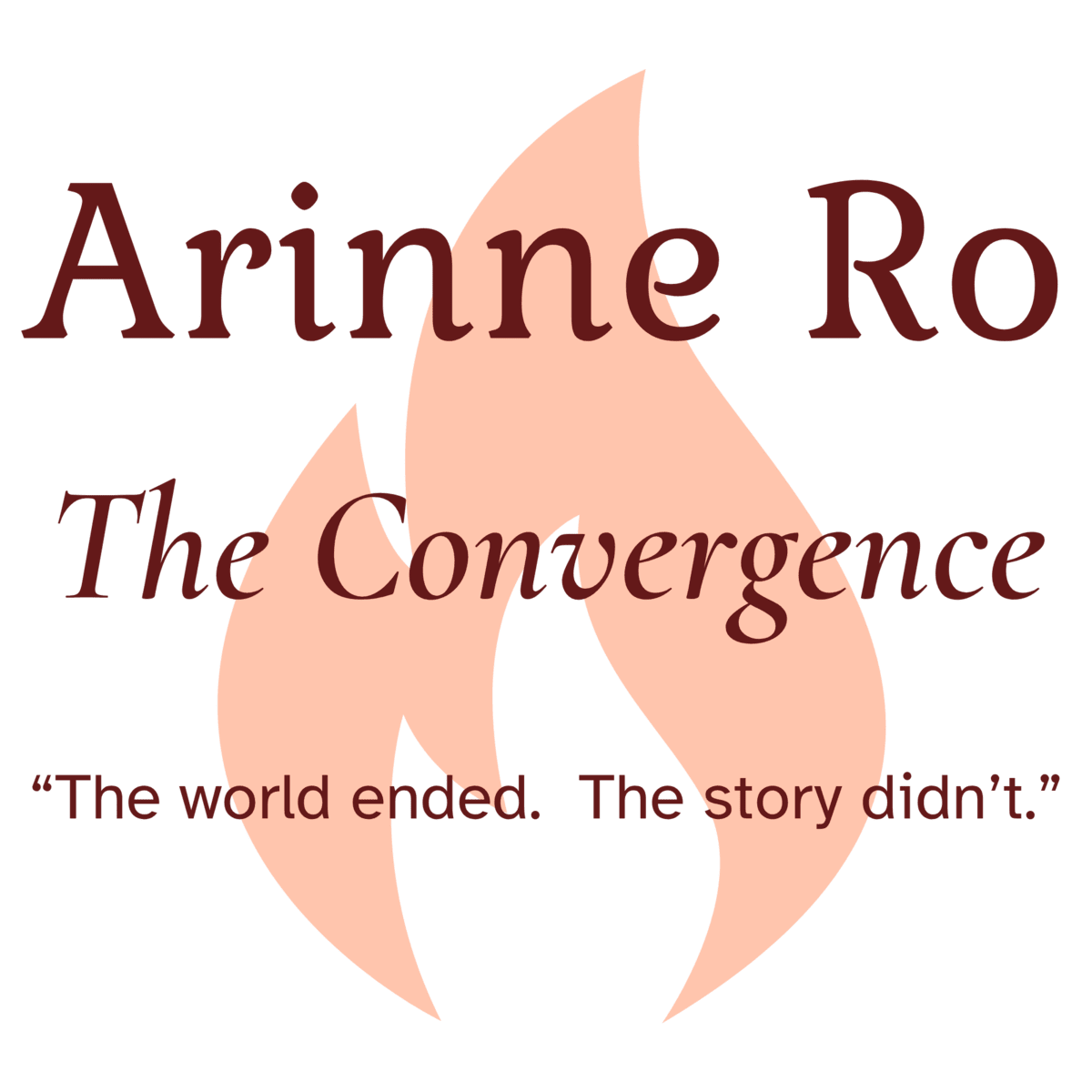
- Personally, I have two logos, one for my imprint (Woven Fates Publishing), and one for my author brand (Arinne Ro). The imprint logo is gray and black and more stern/professional. And Arinne Ro is warmer, more inviting.
- Tagline — A short, punchy line that captures your brand's essence. The best taglines are memorable and genre-appropriate. A sign-off line is a good choice too, if you want both. But definitely the tagline if you only want to do one.
Pro tip: Use a tool like Canva or Adobe Express to mock up your brand elements before committing. It's much easier to tweak a color hex code than to reprint 100 signed copies.
Pro tip #2: Write everything down in a separate notebook: Your fonts (and preferred sizes for each font!), your color hex codes, your tagline
Step 3: Secure Your Domain and Build Your Website
Your author website is your home base — the one place on the internet that's entirely yours, regardless of what happens to any social media platform.
What to do:
- 1. Buy your domain early. Even if your site isn't ready, lock in your URL. Use your pen name if you have one (e.g., yourpenname.com). Domain registrars like Namecheap or Google Domains make this straightforward and affordable. I bought my domain from Google Domains for $15 a year.
- 2. Choose a website builder. WordPress, Squarespace, and Wix are all popular options. Consider what you'll need: a blog, a shop, a mailing list signup, a press kit. Personally, I use authorwebsites.bookbub.com, but please find what works best for you.
- 3. Build the essentials first: an About page, a Blog, and a Contact form. You can always add more later. Bookbub let me add a book page after the fact, because I built my website early. Make sure you find a website builder that lets you add pages (events, updates, a press kit, etc.) as you go along.
- 4. Connect your brand. Use your brand colors, fonts, and logo throughout the site so it feels cohesive with everything else you're building. And expect some trial and error.
Your website doesn't need to be perfect on day one. First, it needs to exist and be findable.
Step 4: Set Up Your Publishing Imprint
If you're self-publishing, you have the option to publish under your own imprint rather than just your name. This gives your books a more professional appearance and separates your publishing business from your personal identity.
Steps to establish an imprint:
- Choose a name. It should feel distinct from your author name and reflect your brand's spirit.
-
Register your ISBNs under the imprint name. In the U.S., ISBNs are purchased through Bowker. When you register, list your imprint as the publisher — this is what appears in library catalogs and retail listings.
- Purchasing your own ISBN gives you ownership of your work.
- Remember, ebooks require a separate ISBN from print books, so if you want to publish print and ebooks, expect to purchase two ISBNs per book.
-
Set up a distributor account. Platforms like IngramSpark allow you to distribute to bookstores, libraries, and online retailers worldwide.
- Note: IngramSpark does offer purchasing the ISBNs for you, but they recommend you buy your own, so you own your work. If they buy your ISBNs, then they own your work.
- Personally, I am using IngramSpark for my printer and distributor, but please look around, there are a lot of publishers out there; you don't even have to self-publish like I am. I'm just sharing what I've learned in the time I've been doing this.
Why having an imprint matters: When your book shows up on a retailer's website, the publisher field will display your imprint name rather than "Self-Published." It's a small detail that signals professionalism to booksellers and readers alike.
Step 5: Show Up Online — Consistently
You don't need to be everywhere. Pick one or two platforms where your readers actually hang out and commit to showing up there regularly.
What works for most authors:
- Facebook remains one of the strongest platforms for author communities, reader groups, and event promotion — especially for adult fiction.
- A blog on your author website builds SEO over time and gives you long-form space to talk about your process, your world, your research.
- TikTok (BookTok) has become a genuine discovery engine for books, particularly in speculative fiction and fantasy.
The key is consistency over volume. One thoughtful post a week beats seven rushed ones.
The Honest Part: It Takes Time (and some money)
Building a brand while writing a book while working full-time is a lot.
There will be weeks where the blog doesn't get updated and the social media goes quiet.
There are times when you have to wait to buy the ISBNs until next payday, because ISBNs aren't cheap.
That's normal. What matters is that the foundation is solid — the website exists, the imprint is registered, the brand is defined — so that when you do have time, you're building on something real. Something your own.
The world ended. The story didn't. Neither does the work of getting it out there.
Have questions about any of these steps? Drop me a line in the Contact page — I'm happy to share more about what the process actually looked like for me.
P.S. I will talk about finding and hiring an editor in a different blog post in the future.
Keep your eye on the fire.
~Arinne Ro